AI is not magic: Building a closed-loop Smart O&M system for the chemical industry on the foundation of ISO 55000
2026-06-22
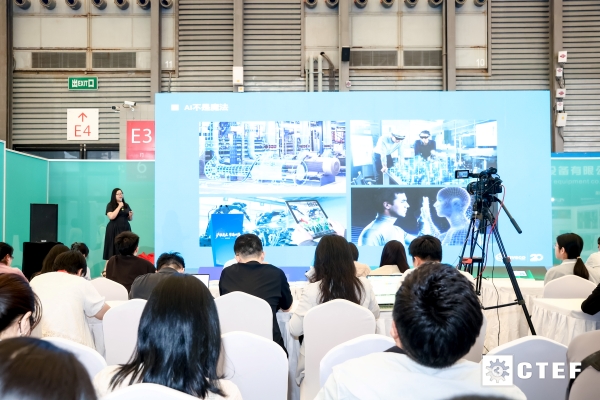
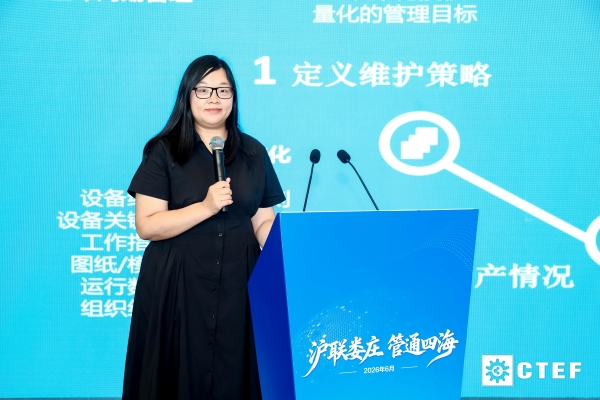
Recently, Sunny Wang, Technical Support Director of Siveco China, delivered a speech titled "AI Is Not Magic: Two Decades of Asset Management Expertise, Practical Experience in Closed-Loop Smart O&M for the Chemical Industry" at the 2026 Chemical Enterprise Smart O&M and Energy Efficiency Improvement Seminar. Drawing on Siveco China's more than 20 years of deep experience in equipment health management, she systematically elaborated on the core concepts and implementation pathways for chemical enterprises to build a closed-loop Smart O&M system.
In recent years, AI has become a ubiquitous topic, with technology evolving rapidly and permeating nearly every aspect of industries, including chemicals. Enterprises should embrace these new technologies with an open mind and a willingness to learn. However, for factories that have not yet established a digital O&M management system—where, for example, maintenance work orders still rely on paper-based workflows—can the hasty introduction of AI tools truly deliver substantial improvements in production efficiency? At a broad application level, perhaps yes—such as using AI to rapidly search electronic documents. Yet in refined management scenarios, the enterprises best positioned to realize the value of AI and achieve closed-loop solutions are often those that have already fully established digital management systems.
This is especially true in the chemical industry, where continuous production, complex operating conditions, and high safety risks are the norm. The completeness of equipment records, the standardization of maintenance logs, and the systematic execution of preventive maintenance plans—the robustness of these fundamental tasks directly determines how much value AI can deliver. If the maintenance history of a single pump can only be traced back by flipping through paper archives, no amount of AI capability can assess its degradation trend, let alone enable predictive maintenance.
AI is not magic: A well-structured database and CMMS/EAM are the foundation of Smart O&M
Data quality determines AI output quality
AI operates on large algorithmic models, and the accuracy of its output is highly dependent on the quality of input data. CMMS/EAM serves as the "infrastructure" for data governance—whether it is equipment registers, work order records, or historical maintenance data, only through systematic collection and standardized recording can clean, reliable "raw material" be provided for AI. The more solid the foundational data, the more precise the AI feedback.
Standardization of processes
AI can offer optimization recommendations, but it cannot fully replace the execution and implementation of processes. CMMS/EAM defines standardized management norms and fixed operating standards. AI insights must be embedded within these processes to be translated into actual action, rather than remaining at the report level.
Closed-loop management drives continuous AI optimization
CMMS/EAM is inherently a closed-loop management tool—AI provides predictions or recommendations, and on-site execution results are fed back into the system via work orders, inspection records, and other means, forming a complete cycle of "recommendation → execution → feedback → re-optimization." This is particularly well-suited to the continuous production environments of the chemical industry. Over time, the long-term accumulation of full-lifecycle O&M data will continue to refine the models—the more data accumulated, the higher the analytical accuracy.
Controllable ROI
From an ROI perspective, AI projects require significant investment and carry inherent uncertainty. However, the implementation benefits of CMMS/EAM are clearly quantifiable—such as improved reliability, reduced maintenance costs, and standardized process management—all of which have been validated across numerous asset-intensive industries including chemicals, manufacturing, and energy. Enterprises must first solidify their data foundation before advancing AI-driven optimization upgrades, in order to achieve long-term, sustainable progress in Smart O&M.
Building a closed-loop equipment lifecycle management system on the ISO 55000 asset management framework
bluebee® Smart O&M Solution is built on the ISO 55000 Asset Management framework and incorporates Siveco China’s 5 Steps methodology to progressively establish a closed-loop asset lifecycle management system, suitable for chemical enterprises and other asset-intensive industries.
Step 1: Define maintenance strategy, align objectives with standards
In alignment with the enterprise's existing assets and equipment, develop an overarching maintenance strategy that clearly defines maintenance plans, resource allocation, organizational authorization systems, and quantifiable management objectives. This should be fully aligned with the enterprise's top-level development strategy, while also covering core objectives such as ESG sustainable development, regulatory compliance, cost control, risk management, performance improvement, and asset lifecycle management.
Step 2: Know your assets, standardize asset data
Establish a structured asset master data system with a unified management framework, covering equipment hierarchy structures, coding rules, spare parts, failure codes, and other foundational information, to build a comprehensive database for subsequent statistical analysis.
Step 3: Prepare and plan, standardize maintenance processes
Based on the enterprise's maintenance strategy and risk profile, develop practical, standardized work plans. This includes defining processes for preventive maintenance, corrective maintenance, and other types of work orders, approvals, and reporting, forming a clear and executable standardized workflow loop.
Step 4: Execute and report, implement full-process control
Establish systematic work recording and feedback mechanisms to standardize work execution. With standardized processes in place, ensure the import of maintenance system rules and the export of execution results, achieving refined control through "planning in advance, supervision during execution, and reporting after completion."
Step 5: Analyze and improve, build a continuous improvement loop
Leverage the asset database and systematic work feedback to conduct analysis and monitoring of key performance indicators, including failure rates, O&M costs, ROI, and safety risks. Use visualized data dashboards to identify management gaps and dynamically optimize maintenance strategies, forming a long-term iterative asset management loop that helps enterprises achieve cost reduction, efficiency improvement, data-driven decision-making, and safe operations.
Empowering chemical Smart O&M with AI technology
AI is not a cure-all. With over two decades of experience in the asset management sector, Siveco China has always embraced intelligent technological transformation with an open attitude, actively applying it to O&M scenarios such as predictive maintenance. Two AI-powered features are currently in use:
As early as 2023, Siveco China integrated an AI-based document extraction tool into the bluebee® X toolkit. This tool is particularly well-suited for new plant projects. Enterprises can upload in bulk the extensive O&M manuals and technical documentation received from equipment manufacturers. The system automatically and accurately extracts key O&M-related information—including preventive maintenance tasks, execution cycles, work content, technical requirements, and more—and populates them into standardized data templates. This process significantly reduces manual data entry and workload, effectively improving data accuracy and standardization, and providing strong support for smooth project delivery.
In 2025, the bluebee® X Smart O&M platform also introduced an Asset Health Scoring feature built on the DeepSeek model. Its advantage lies in integrating real-time operational data with historical inspection records to deliver more accurate, actionable insights into equipment health, helping maintenance teams prevent failures in advance and continuously optimize performance. The built-in conversational AI Q&A engine simplifies complex queries and provides context-aware insights and personalized recommendations. Additionally, this feature is adaptable to multiple asset types and supports enterprise-level reporting and seamless integration.
During the session, Sunny Wang also shared project case studies from chemical companies including Arkema, Hebei CASDA Biomaterials, Kerneos Aluminates, Tianjin Shell Oil Storage and Transportation, Hanwha Chemical, and Sichuan Lutianhua. These cases demonstrate that bluebee® Smart O&M Solution remains highly adaptable and reliably deliverable across different enterprise scales, diverse regional management cultures, and complex process requirements. Finally, she introduced the latest white paper published by Siveco China and invited attendees to download it for further study, and to engage in further discussion on specific challenges and implementation strategies for smart O&M in the chemical industry.
 简体中文
简体中文